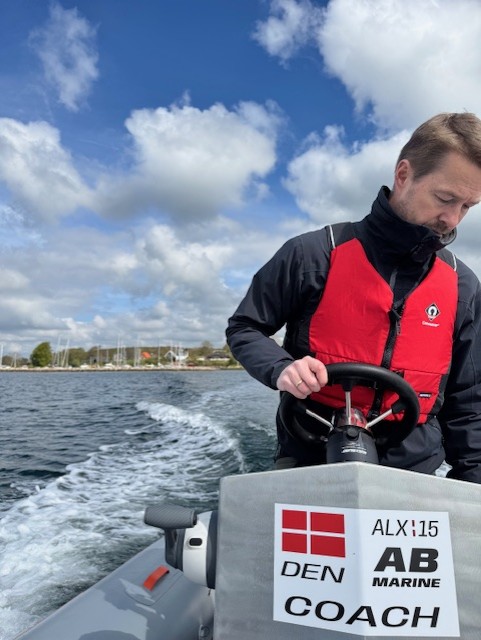
What is a Rubber Boat?
A dinghy is an inflatable boat made of strong, flexible materials such as PVC or rubber. It typically does not have a solid bottom, but an inflatable bottom, making it easy to transport and store. Inflatable boats are often cheaper than RIB boats and are ideal for leisurely sailing on calm waters or as tenders for larger ships.
An important difference between a rubber dinghy and a RIB is that a rubber dinghy typically does not have a solid bottom, but instead has an inflatable bottom. This construction makes the rubber dinghy lighter and easier to store, but also less stable and durable in demanding conditions.
Advantages of inflatable boats:
- Easy to transport: They can be easily stored and inflated quickly.
- Budget-friendly: Inflatable boats are often cheaper than RIB boats.
- Easy storage: Inflatable boats can be deflated and stored compactly.
Disadvantages of inflatable boats:
- Less stability: Without a solid bottom, inflatable boats are generally less stable, especially in high waves.
- Less durability: Inflatable boats are more prone to damage as they do not have the same robust construction as RIB boats.
What is a RIB boat?
Advantages of RIB boats:
- Stability and course stability: RIB boats are very stable, thanks to their hard V-hull. This makes them easier to maneuver and more stable on the open sea. Inflatable boats without a solid bottom often have problems staying on course, especially in higher waves, where the RIB boat stays on course. Read more about the importance of the hull here
- Fuel efficiency: Due to their lightweight construction, RIB boats are more fuel efficient than many other vessels, requiring less power to get up to speed. This makes them ideal for long-distance trips or professional tasks such as rescue, where fast propulsion is important.
- High safety: The inflatable pontoons on RIB boats provide extra safety. Whether you collide with another boat or take on water, the RIB boat remains afloat, making them almost impossible to sink. The pontoons also provide protection against damage when maneuvering close to other boats or when docking.
Disadvantages of RIB boats:
- Higher price: RIB boats are generally more expensive than inflatable boats, which can be a factor if you are on a tight budget.
- Heavier: Due to the solid bottom and larger construction, RIB boats are often heavier and more difficult to transport than inflatable boats. However, AB Inflatables' RIB boats are among the lightest on the market, making them easier to handle and transport compared to other RIB boats. This lightweight construction makes AB Inflatables an attractive choice for boat owners who need a RIB boat but do not want to compromise on weight and maneuverability.
An excellent example of this is the Ventus VL from AB Inflatables. This model is designed to be lightweight yet robust, making it the ideal boat for leisure. Ventus VL offers both speed, stability and easy transport – all without compromising on quality and durability.
Inflatable Boat vs. RIB Boat – Which One Should You Choose?
The choice between an inflatable boat and a RIB boat depends on your needs and the conditions the boat will be used in.
- If you are primarily looking for a boat for leisurely sailing on calm waters and don't need high speed or great stability, an inflatable boat would be a good choice. It is cheaper, easier to store and easy to transport.
- If you need a boat that can handle higher speeds, more challenging conditions, and offers better stability, a RIB boat is the best choice. The hard V-hull construction makes RIB boats both stable and course-stable, providing better control on open water or in higher waves. RIB boats are also more durable and nearly unsinkable due to the inflatable pontoons, providing extra safety in risky situations.